
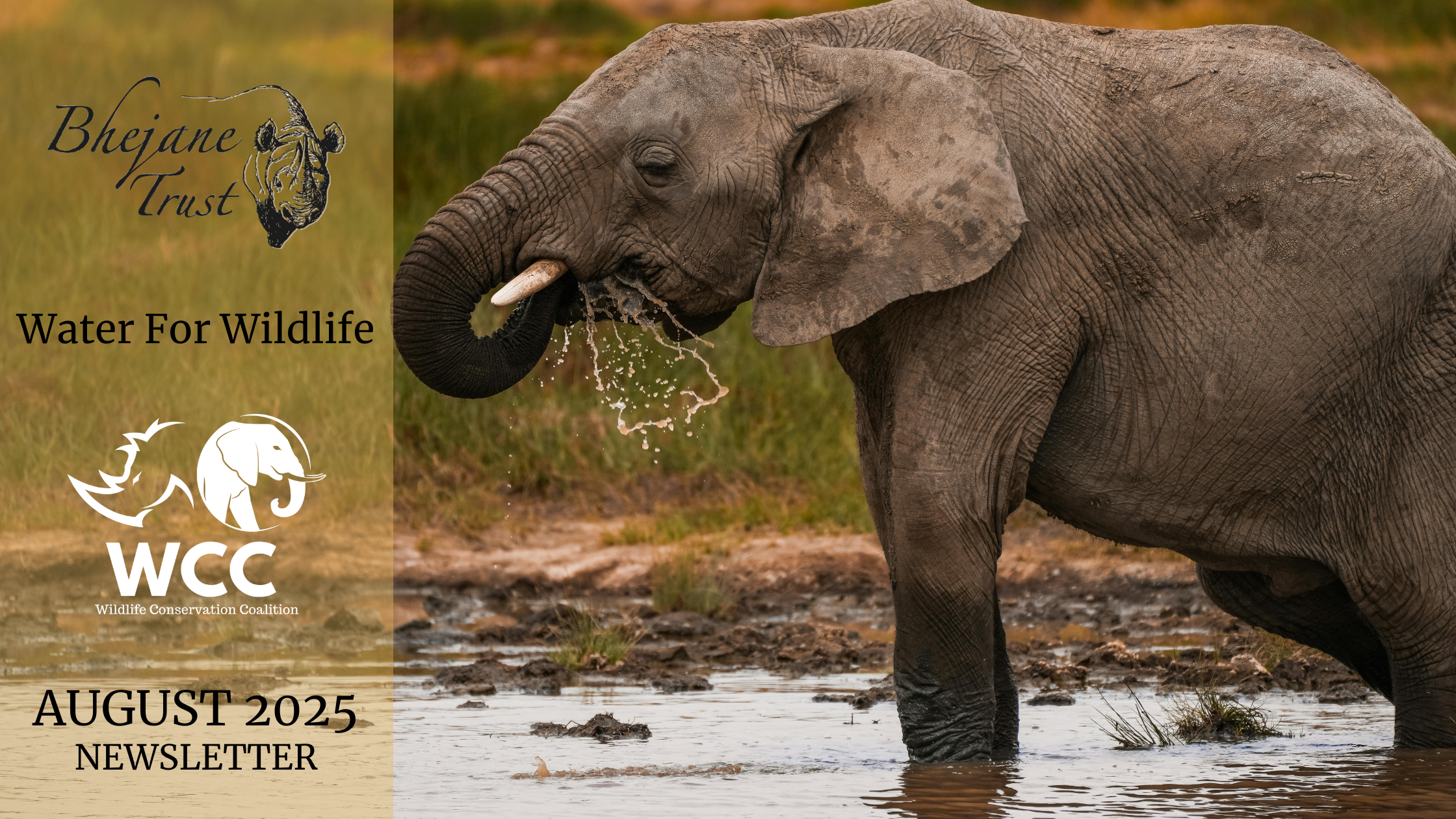
Bhejane August 2025 Update: Water For Wildlife The seasons have certainly shifted this month. The cold brisk temperatures of winter, have been replaced by sapping heat. The hot dry season has officially began, and our water for wildlife work is need more than ever! As shimmering haze has descended upon the landscape as the midday heat beats down on the wilting vegetation. The splashes of green we had seen at the start of the month has all but gone and with the rising temperatures, the bush is drying out fast! The herds have returned and the game viewing is exceptional at the moment. Travellers through our wild spaces have been blessed with incredible sightings. A hidden blessing synonymous of the dry season months, as animals congregate around the dwindling water sources. Fortunately, we are ready for it. Aside from the inevitable broken pipes and general maintenance, our water infrastructure is all performing well. Providing just over 1.5 million liters of water a day ,there is a certain sense of achievement witnessing the life that our work supports! Kazuma National Park The burns of last month have produced an irresistible green flush to the depression which is now teeming with animals. Herds of Zebra, Wildebeest and Tsessebe can be seen almost everywhere you look. Even the elusive Oribi are out in force with a recent visit producing 9 in a single drive! With the influx of prey, predators are almost a permanent feature now, with regular sightings of Cheetah, Lion and Leopard. We host our 5th annual game count on the 6th September and are very excited to see what sort of results come out of this Park. With our working only having started here in 2019, each year brings with it new growth and developments as the ecosystem responds to the improving conditions. All is well on the water front. We turned up the pumping rate on Insiza again due to the drinking pressure, and installed a new meter at Roan pan to better monitor the flow of water. Probably the biggest win for the month was a complete factory reset of the battery system at Corner Pan. Whilst it’s been performing well, the pump has been switching off at about midnight, but the batteries fitted should see it go through to almost sunrise. The factory reset did exactly that, and this pump is now supplying life giving water for almost 24 hours. At 5000ltrs per hour,that’s quite a bit more water in a day! Zambezi National Park – Chamabonda With much of the vlei now having been mowed,visibility and access to the succulent new growth is at its best. Herds of buffalo and zebra and a near constant presence along the open grasslands. The elephants have also returned in number, with all water points boasting herd after herd in the late afternoons and into the evenings. A pack of wild dog have been seen regularly along the vlei system, and we recently discovered a den site housing a bunch of next generation dogs. Their presence is such a testament to the thriving ecosystem that the vlei has become. We look forward to watching these young animals grow aid in the expansion of these endangered species. Our annual game count includes the Chamabonda Vlei,and with all water points spoken for this year, it promises to deliver some incredible sightings. Whilst some work has been done on the roads, September will see an expansion to this. The excellent rains of last season caused havoc in the clay sections, creating deep ruts. Tonnes of gravel will be dropped, and our hope is to restore vast stretches of the road to last countless rainy seasons. Our Water for Wildlife work is at a care and maintenance stage on the Chamabonda. Weekly checks make up the bulk of our work, cleaning solar panels and attending to any repairs that may be required.Otherwise, all our systems are working well, and there is ample water throughout the vlei. Hwange National Park – Robins and Sinamatella After the upgrades reported on last month, much of our efforts have been centered on care and maintenance. With the vast majority of our boreholes across the Hwange landscape, this is no small task. The teams travel literally hundreds of kilometres checking water points and ensuring that our infrastructure is functioning at capacity. Solar panel cleaning is the order of the day. As the land dries out, the levels of dust greatly increase. Caked panels can lose up to 10% efficiency and so ensuring that they are clean is vitally important to maximize water delivery. With the increased drinking pressure, and the return of large numbers of elephants, our pipelines have taken a bit of a hammering.No less than 4 emergency repair jobs have been done this month, where elephants have found the buried pipes and pulled them up. Whilst this does not stop the water from flowing, it does stop it reaching the pan and if left unattended will cause the pans to dry up. The battery installation at Manzibhovu last month is performing exceptionally well. We are confident that this vital back area pan will hold excellent water throughout the dry season and service thousands of animals. With the increased pumping time, and additional pressure, we had to completely upgrade the rising main pipe down the borehole.This is a solid 100m length of pipe that lives entirely underground, bring water to the surface. This pipe has been on the cards for an upgrade for awhile now as it has split many times and is full of joins. We took the relatively quiet month to achieve this. The battery system installed back in June at Mahabotiis also doing incredibly well. Usually by this time of the year that pan has dried up, and the large bull elephants suck the water directly from the outlet pipe. Not allowing a single drop to reach the pan. Different story this year. The additional pumping hours, and the greatly increased yield surpasses the demand, and
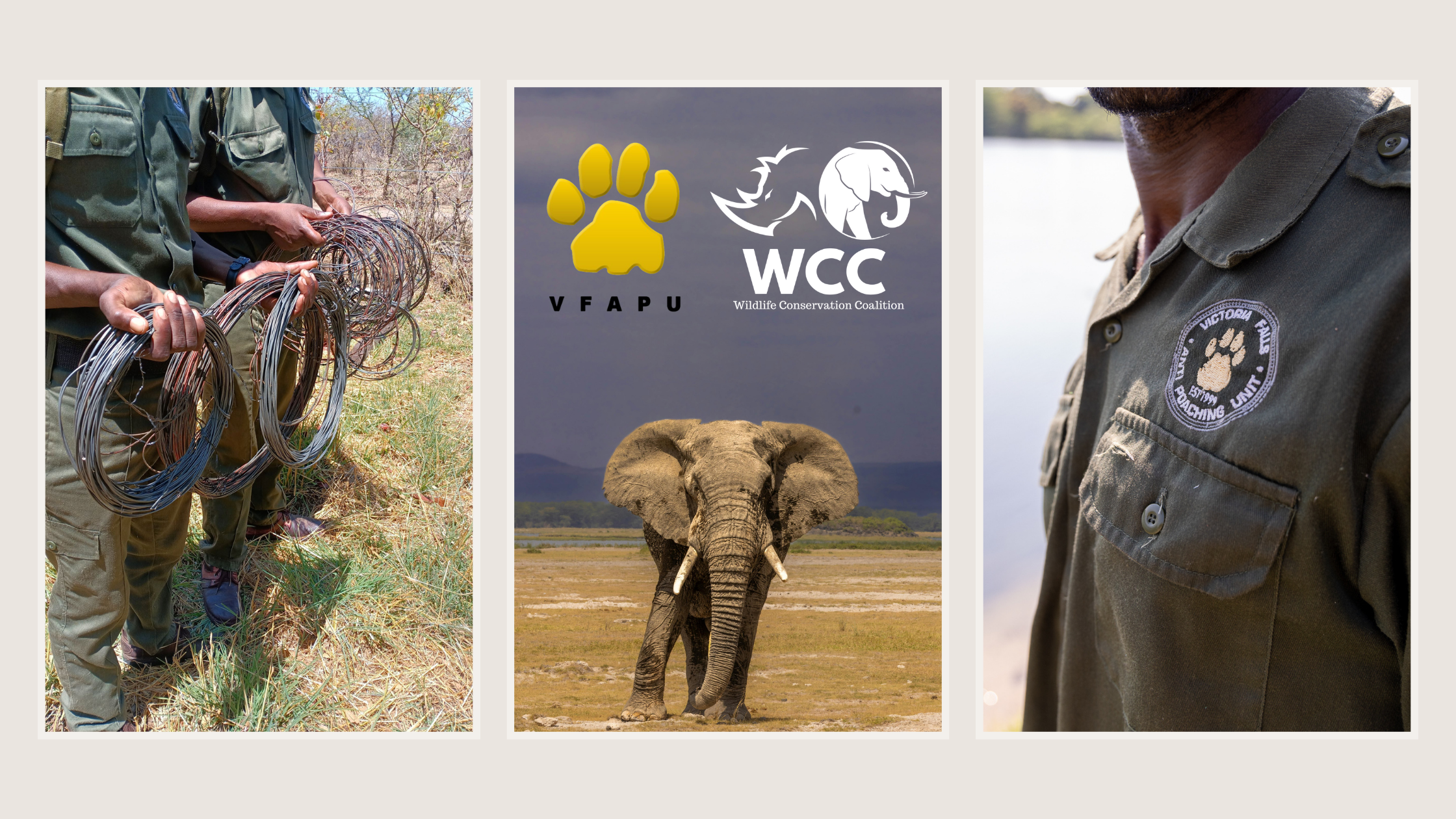
VFAPU: Intelligence Continues To Produce Results
Victoria Falls Anti-Poaching Unit August 2025 Update August has seen the return of the heat, temperatures gradually climbing into the mid 30’s. Winter is officially over, and the tough dry months lie ahead. From a poaching front, this is traditionally when things start to get busy. As the last of the natural water dries out, and the scorching sun bakes the earth, animals congregate around the little available resources. This trend certainly seems to be the case this month, with our Rangers reacting to multiple incursions in a bid to protect our animals. It’s been a busy period, with the Unit teaming up with the Wildlife Authorities in multiple joint operations deeper in the Park as well as monitoring an increasing number of animals venturing into town in search of fresh food. This time of year brings with it the threat of bush fires, with our Rangers assisting to extinguish two already. Besides the fires destroying vital grazing necessary in the months ahead, they are often intentionally set by poachers. They do this to open up the bush for better hunting success, but also to draw animals in when the ashen ground turns to a green flush. Once again, the growth of our intelligence and informer networks are reaping excellent rewards. Our two major arrests this month have been thanks to information gathered. Whilst it is never nice to lose and animal, it is incredibly satisfying catching a poacher red handed. It’s about as real as our job can get, and often leads to much stiffer sentences. STATISTICS FOR THE MONTH The increase in the poaching threat reported on last month has certainly continued into August with multiple incursions seen and several arrests made. The frustrations of July where we ambushed several different snare lines was alleviated this month with the successful arrest of two poachers. Suspects we believe to have been responsible for the snare lines discovered last month. Almost half of the snares recovered in the statistic above have not come from the bush, but rather from successful raids of suspects’ houses. This is always the best way to recover a snare, before it is deployed and could potentially cause harm to our animals. Whilst we have had some great wins in August, there is certainly an increase in the threat towards our animals. We expect this to continue in the months to come as the bush gets more challenging, and the animals venture closer to people. Whilst we report yet another nil stat this month on the animal rescue front we have received reports of animals with snares on them in need of rescue. These have all been spotted by various good Samaritans deep in the Park and outside of our primary operational area. We appeal to all who venture into the wild to immediately report any animal you encounter in distress and in need of rescuing. We will continue searching of those that we know of and hope to relieve them from their suffering soon. Whilst not necessarily rescues, our Rangers have been kept very busy this month with the influx of animals into town. Elephant, Buffalo and Hippo have been the primary candidates, and we expect these numbers to increase and the vegetation in the bush continues to wilt. This may not be considered anti-poaching, but we definitely see it as animal protection. Wildlife will always take second place to people, and should an incident occur where someone gets injured, the animal will ultimately suffer. Our role is to simply monitor and ensure that the animals are given the respect they deserve and if the opportunity arises, to safely escort them back into the bush. Natural causes of death are part of life in the bush, and whilst it is never nice to encounter dead animals, this is nature and it does happen. However, the carcasses discovered where the cause of death is poaching are always a bitter pill to swallow. We discovered 3 such carcasses this month, and all caused by the same poachers. The kudu was freshly killed, and what led to the arrest of the suspects. During a routine search of their houses, the skins of a serval and a side stripped jackal were also found. Whilst these were several months old, they still represent innocent animals that have lost their lives to the greed of humans. Causes of Death: 2 Kudu, 1 Bushbuck and 1 Buffalo killed by predators 1 Waterbuck died of natural causes 1 Kudu, 1Serval and 1 Side Stripped Jackal killed by Poachers. Besides the endless firewood poaching arrests made, we managed to apprehend a further four individuals in two separate operations for the illegal trade in bush meat, and snaring. In both of these operations,intelligence and informers led us to the success. The more eyes and ears we have in support of our work, the harder it is for poachers to get away with their crimes. We are exceptionally grateful to those brave souls who go out of their way to alert us to situations where our wildlife is being persecuted. The first arrest was made after a tip off of two individuals selling dried bush meat at a local market. Immediately our teams went undercover and managed to catch both culprits red handed.Unfortunately they had already sold a large portion of the meat, and upon arrest only had about 18kgs rolled up into individual bundles. Regardless, they were arrested and charged. The biggest win for us was the arrest of two individuals for snaring. Unfortunately a kudu lost its life to these criminals, but the evidence gathered strengthened the case and we are very pleased to say that each culprit is currently serving 2 years behind bars for their crime. HIGHLIGHT OF THE MONTH The highlight of the month for me is the shear tenacity and never give up attitude of the Rangers. Leading the successful arrest of two notorious poachers after 12 hours of operation. It all started at 2pm one afternoon when