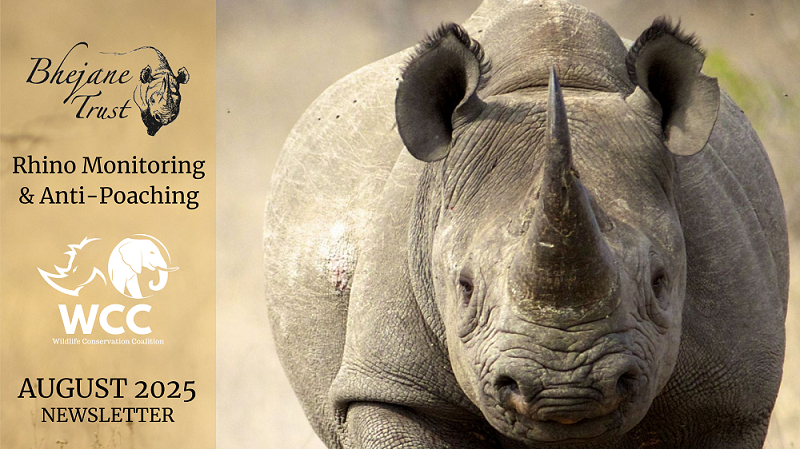
Bhejane Trust August 2025 Update: Rhino Monitoring & Anti-Poaching Almost overnight, the seasons shifted and the cool winter weather made way for the scorching heat of the hot dry months. The baking sun has quickly dried out much of the vegetation, and this has had a big effect on both our rhino monitoring and anti-poaching work. As can be seen by the stats below, rhino signs remained pretty constant. We were fortunate again this month to get a physical sighting. Whilst this may come across as strange given our monitoring work, these animals are incredibly elusive and seldom seen. Often trekking for more than 30km in a single movement and very weary of any sign of humans. A defence mechanism that has seen this small population survive for so long. It’s been another challenging month on the anti-poaching front. Whilst there was a great arrest, and some close contacts, we are far from being on top of the situation. We have recently managed to secure funding through the incredible contribution of the Hwange Conservation Society which will allow us to engage a further 2 scouts. This incredible gesture will go a long way in increasing our boots on the ground coverage within this vast landscape. There is however so much more that needs to be done to curb the extensive threat facing our animals in this area. With the bush thinning out and the animals congregating around the dwindling resources, the next few months represent the busy period for poaching and we expect to see a further escalation to this threat. We need your help more than ever to greatly increase our efforts and mitigate the significant loss of animal life being experienced! Statistics For The Month Rhino Monitoring Whilst we have continued to see regular sign of rhino, we are mainly concerned that it is less than we expect. With the hot months having now begun, and the natural resources drying up, we expect to see an increase in the weeks ahead. A team of Victoria Falls Anti-Poaching Unit Rangers will be heading into Sinamatella in September to give a boost to the manpower on the ground and aid in covering a greater area. Our aim is two fold, find as much rhino sign as possible, and at the same time, mitigate as much of the poaching threat as we can. Whilst this a massive benefit of uniting the efforts of two conservation Trusts under a collective purpose, it is not a long term solution. Each day that the VFAPU team is in Hwange, is a day that they are not in Victoria Falls. However, the threat being faced in Hwange is far greater at this stage, and necessitated this manpower boost. We hope to make a big impact in the 2 weeks that the team will be there. September will also see the download of much of our camera trap data. These cameras have been out for just over a month and its always exciting pouring through the thousands of images, every click high with anticipation for the next confirmed sighting. Anti-Poaching It has been another trying month from an anti-poaching point of view. The teams have been kept very busy detecting and reacting to multiple threats across the vast landscape. There efforts reaped some rewards with a fantastic arrest made by National Parks Rangers. Two suspects caught at a base in possession of fresh meat and over 20 snares. Three further contacts were had in the month with poachers using dogs to hunt. This is not only a very effective method of hunting, but also poses huge challenges to the Rangers. The incredible senses of the dogs more often than not detect the ambushing Rangers and alert the poachers before a successful arrest can be made. Whilst this is frustrating with no arrests made during these three contacts, the poachers were most certainly disturbed, and follow ups showed that they exited the area. We may not have caught them, but we most certainly saved the lives of many animals. Sadly, one of these contacts was a result of discovering the dogs mid hunt where there is often quite a bit of barking as they hunt an animal. By the time we reached the scene, the dogs had managed to catch and kill an adult baboon. There was no sign of the poachers and we believe that these dogs may have become separated from the rest of the gang during a previous hunt and instinctively chased whatever animals they came across. As is the law regarding the discovery of dogs within the National Park, they were destroyed by the Wildlife Authorities. Regardless, this contact highlights the effectiveness of poaching dogs, and that no animal is immune to the threat that they pose! The further two contacts both involved extensive tracking by the Rangers. Locating spoor on a routine patrol, the teams immediately set about following. The first incident led them to not one, but 3 well used poacher bases. The team cut spoor that was a couple of days old. This led them to a base that confirmed the poachers had been there a few days prior. However, clear exit spoor was found and so they continued tracking. A second base was discovered. A lot fresher, but still a day or two old. Again the team found the exit spoor and continued tracking. After only a few kilometres they came across the third base. Sign showed that it had been used that morning. Unfortunately, whilst investigating this base, 3 dogs appeared and began sounding the alarm. As it was now late in the evening, these dogs too where destroyed. Investigations the following morning showed no sign of the poachers having returned and spoor suggested that they had indeed been alerted by the dogs alarm call and made good their escape without being seen by the Rangers. The team recovered over 15 litres of water in various containers. This is a vital resource in this harsh environment, and