
Water For Wildlife
Bhejane currently assists with the management of 52 solar powered boreholes, pumping over 1.5 million liters of water a day for animals across these wildlife areas.
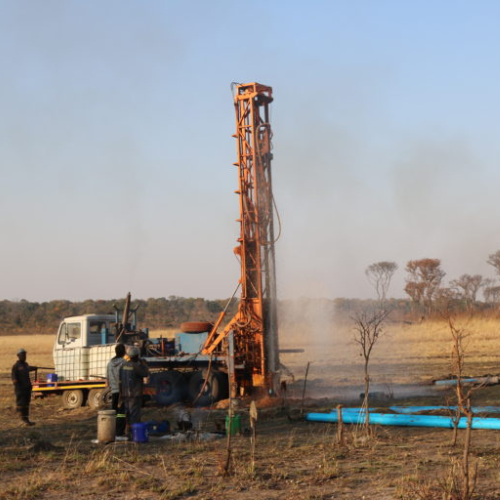
Artificial water (provided by man) has been part of these wild ecosystems for almost a century, with the first borehole being drilled in Hwange National Park in the 1930’s. The reason, there just isn’t enough natural water within this semi-arid region to sustain the significant wildlife drinking pressure. Rains provide natural pools from November through to April, but then stops. For the next 7 months, there is no rain. Everything gradually dries out and by September/October the landscape is dry and baron. Artificial water becomes the only opportunity for animals to access this vital resource.
AREAS OF OPERATION
Zambezi National Park - Chamabonda Vlei
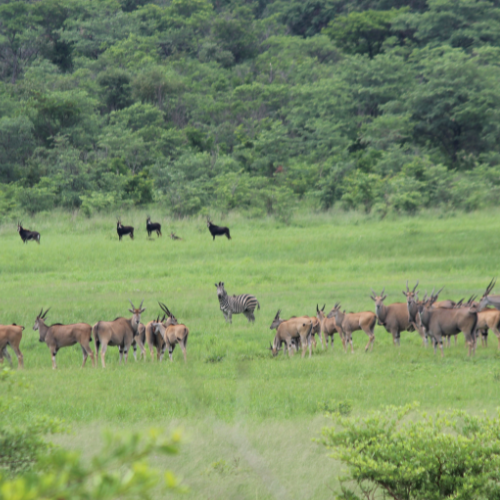
Our work began in 2009 on the Chamabonda Vlei in Zambezi National Park. There was existing infrastructure at two sites along the vlei, but these had not been functioning for many years. The result of which meant that the vlei was not utilizable by animals during the dry season. Whilst there is ample food to sustain large populations, its just too far from water for most animals to access it. As such our efforts began with a vision to rectify this and rejuvenate the water supply in the vlei.
Until the mid 2000’s diesel engines were the primary method used to pump water from underground to the surface. These would be fired up in April as the rains disappeared, and would run continuously through to the next rains in November. Elephants in particular had learnt to listen out for the loud chugging of the engine, and would come running in for a drink of fresh water.
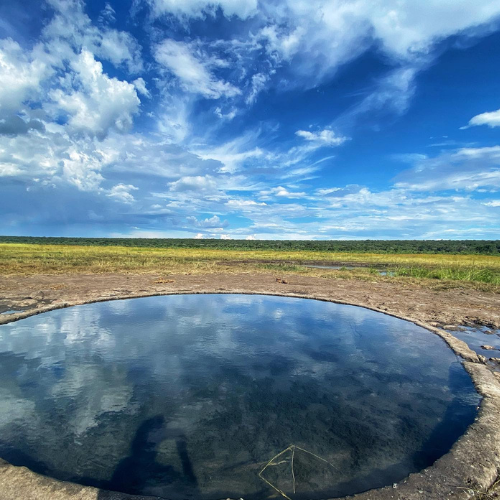
We managed to get the two engines on the Chamabonda replaced and for the first time in years, the vlei held water throughout the dry season, thus achieving our goal and starting our decade’s long journey of water for Wildlife.
Solar-Powered Water: A Lifeline in the Dry Season
For two years, we fought and toiled with the diesel engines. Realizing very quickly just how high maintenance and labor intensive they are. Belts would often slip or break and needed to be replaced and there was almost a continuous trip to top up diesel. However, it’s what we knew we were in a rhythm and they were working.
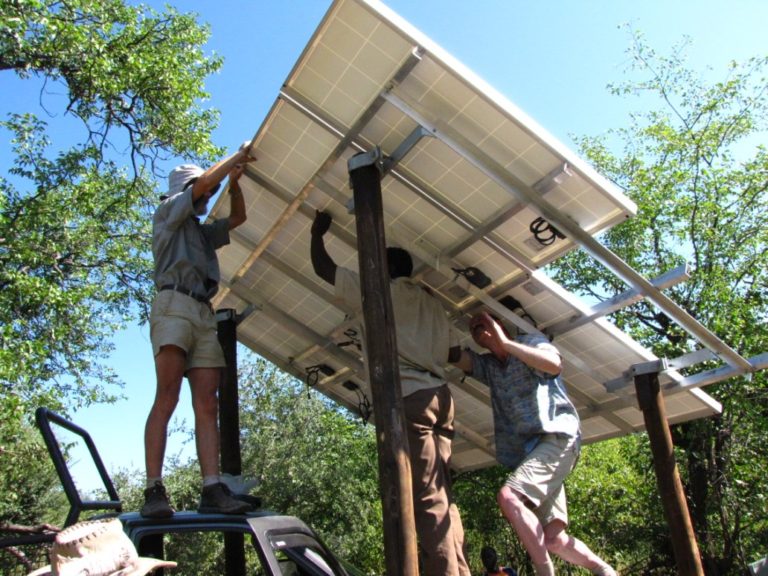
In 2011, a donor, experienced in pumping water through the use of solar power offered to fund a complete solar system toward our work. Skeptical, we opted to rather establish a third water point in the vlei, rather than tamper with our diesel machines. This was installed, and almost instantly revolutionized our water for wildlife program. From skeptic to advocate, solar is now responsible for powering 50 of our current 52 systems.
Hwange National Park - Sinamatella
Our work grew rapidly over the years, expanding into Hwange National Park, Sinamatella area in 2011, then into Robins in 2016 and finally into Kazuma Pan National Park in 2019.
Initially our focus aimed to resuscitate the infrastructure that has once been in place. Many of the holes were still useable and we simply needed to remove the dilapidated engines and replace them with solar power. Much of this focus was on establishing water in areas that also offered good grazing. In the dry season, food is as much a challenge for wildlife as water. With significant amounts of animals congregating around the available water, the grazing pressure surrounding it is significant. By strategically developing water in areas that also offer good grazing, we are able to increase the utilizable area for animals and greatly reduce the pressure.
By 2024, we had reached a point where there was sufficient distribution of water and so our efforts turned to maximizing the amount of water each system was producing.
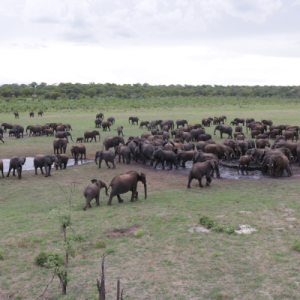
Solar is fantastic, but it has its limitations. It is completely reliant on the sun and so only pumps water effectively for 8 hours a day (8am to 4pm). The highest drinking pressure occurs between 5pm and 10pm at night where hundreds of elephants descend to quench their thirst after a long day of foraging. This limited pumping time greatly affects the condition of the water point, with many drying up but for a small pool around the outlet pipe.
Advances in technology, and our understanding, led to the evolution and introduction of batteries to our work. The addition of this power source to the solar systems allows the pumps to continue running well past sunset, supplying significantly more water, but most importantly, doing so during the peak drinking hours. With a handful of battery systems already installed, our growth is centered on getting the current infrastructure to produce water 24 hours a day.
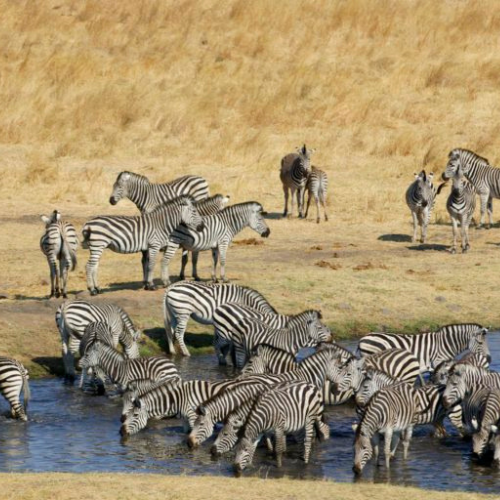
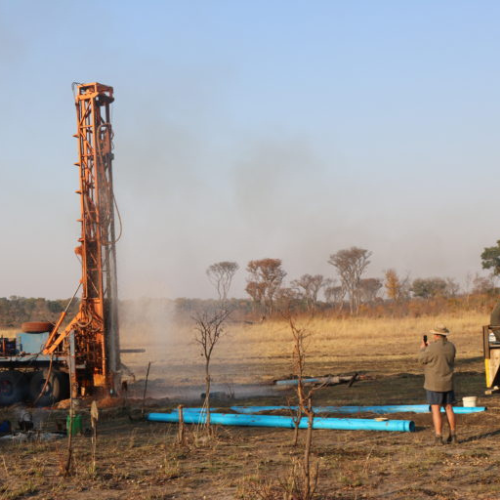
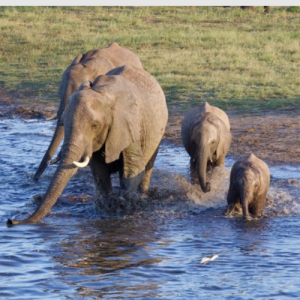
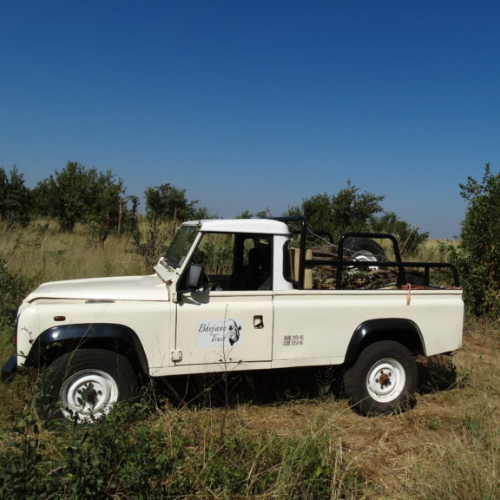
This work is of vital importance within these landscapes with thousands of animals relying on the water provided by these systems to survive the dry season. Climate change induced droughts have devastated the region in recent years and further prioritizes the significance of our efforts.
Besides the installation of more battery systems, our daily efforts focus on the care and maintenance of the infrastructure currently in place. This is no small feat given that many of the systems are in the back areas of the Parks. We have 3 dedicated water teams across the landscape who travel many hours and rugged roads to access these points. Often the last tracks on the ground, our own from the trip before.
Our aim is to visit each water point a least twice a month, more for the systems closer to our base. These visits are to ensure that everything is working and to conduct inevitable repair jobs. These come in all shapes and sizes, from elephants uprooting pipes, to baboons damaging solar panels, to pumps breaking down and needing to be replaced. A system not producing water for even a few days can have catastrophic implications on the viability of that water point, especially in the hot dry months when pressure is at its greatest. As such, constant vigilance and monitoring is essential.
At the same time these visits are an opportunity to collect data, important to our management of these systems. Each borehole pumps water through a meter, thus giving us an accurate idea of how much of this vital resource is being supplied. At the same time, we monitor the effect of pumping on the underground water table. Through the use of an electronic tape measure, we conduct dip tests which calculate the recovery rate of the water supply beneath us. This data shows us if we are pumping too much water for the hole to manage, or whether we are able to get more.
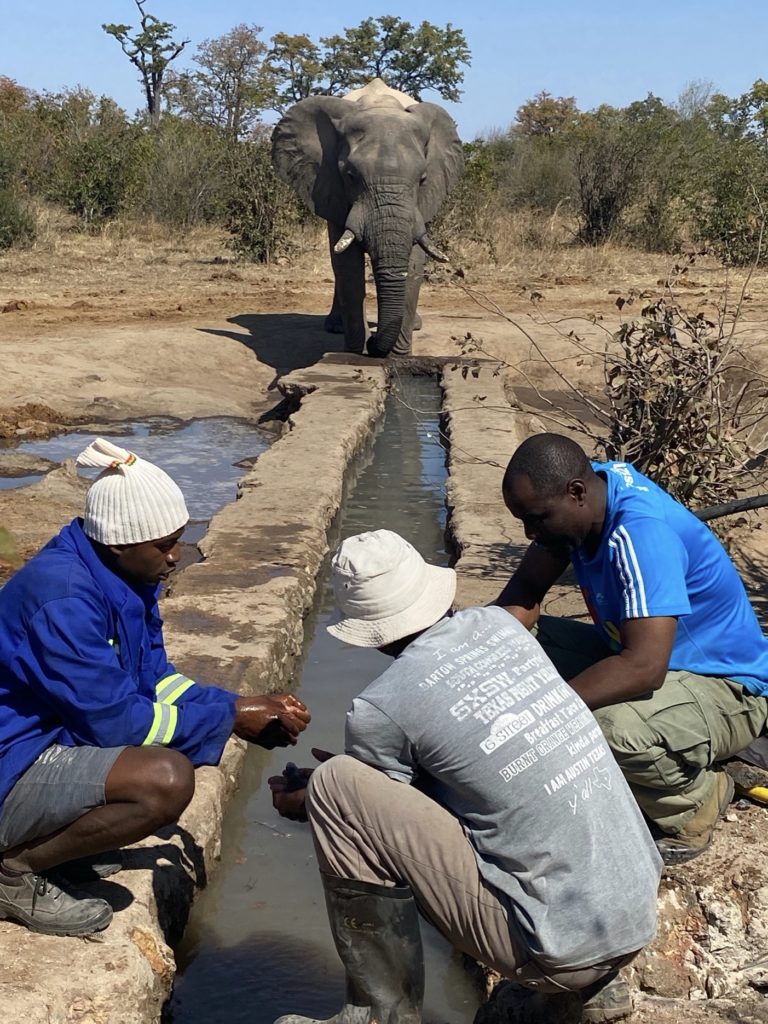
Water is Life - this is no more visually represented than our Water for Wildlife work!
Water is life in the wild. In harsh, dry landscapes, reliable water sources mean the difference between survival and loss for countless animals. Water for wildlife sustains entire ecosystems, keeps animals moving naturally across the land, and helps reduce conflict as wildlife search for scarce resources. Protecting and providing water is one of the most powerful ways we can safeguard wildlife and ensure these landscapes remain alive.
Latest News
No Posts Found!
How You Can Help?
You can donate towards our Water for Wildlife efforts by directly supporting the maintenance and operation of vital water points in protected areas. Your contribution helps keep pumps running, fuel supplied, and infrastructure maintained—ensuring wildlife has access to life-saving water during the harshest dry months. Every donation, big or small, plays a direct role in sustaining wildlife and the ecosystems they depend on.