Bhejane Water For Wildlife Update December 2025-March 2026
The wet season is our quite period in the year. Mother Nature takes over the responsibility of ensuring that there is ample drinking water for the animals. And wow, what a season it has been!
The 2025/2026 rainy season has been one of the best in recent years, with much of the landscape having received an average 800mm of rain. Not only has the volume been great, but the regularity and consistency has meant that the vegetation has thrived. Thick green trees and towering grass dominate much of the landscape now, and signifies excellent grazing for the season.
With the torrential storms, flooding rivers and inaccessible roads there is not a lot of work that can be done. As such, the teams have taken their hard earned annual leave, resting up after a busy period, and recuperating in preparation for the inevitable dry season ahead of us.
At the time of writing this update, the rains seem to have subsided and there is a notable shift in the seasons. Whilst all signs point to a relatively low pressure year, our water for wildlife work remains just as important as the bush dries out and the herds descend into the landscape.
KAZUMA NATIONAL PARK
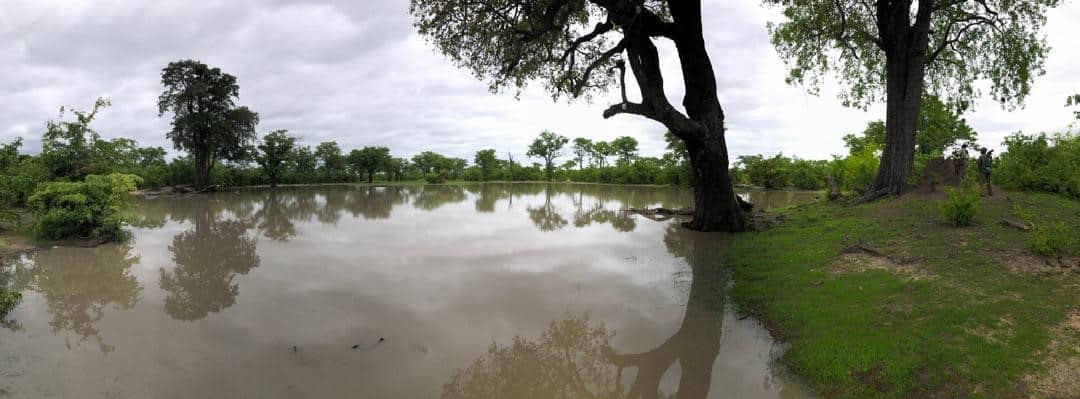
Kazuma has received the bulk of the rain this season, with some estimates suggesting over 1000mm falling. The depression is pretty much flooded, with two hippo taking up semi-permanent residence in the middle of the vlei. The game has scattered and the grass towers above your vehicle.
Bar a few roads, the park has been pretty inaccessible at the moment, with much of the black cotton soil soaked and slippery. Parks have done a fantastic job attending to particularly bad patches, filling them with rocks and allowing a bit more access. Already talk is shifting to fire protection. With the abundant vegetation, this will be a very real threat in the months ahead and planning has begun.
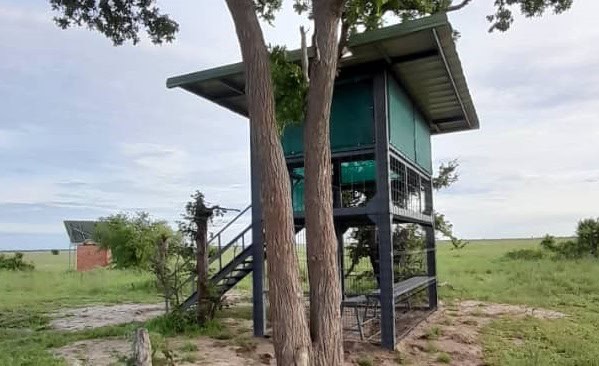
Thanks to Kazuma Stakeholders, corner pan is now the proud owner of a day visitor platform. Set away from the overnight hide, and designed to decongest traffic, and give opportunity to more people to experience the wonder of the depression.
From a water for wildlife point of view, there is really very little that we have been able to do the last few months. Access to several of our systems has been impossible and all pans are near 100% capacity. As the land begins its annual dry out, and access gets easier, our work begins in earnest. Over the next few weeks, the teams will access all of our systems and ensure that they are pumping at capacity, to maintain the already swollen pans.
ZAMBEZI NATIONAL PARK – CHAMABONDA
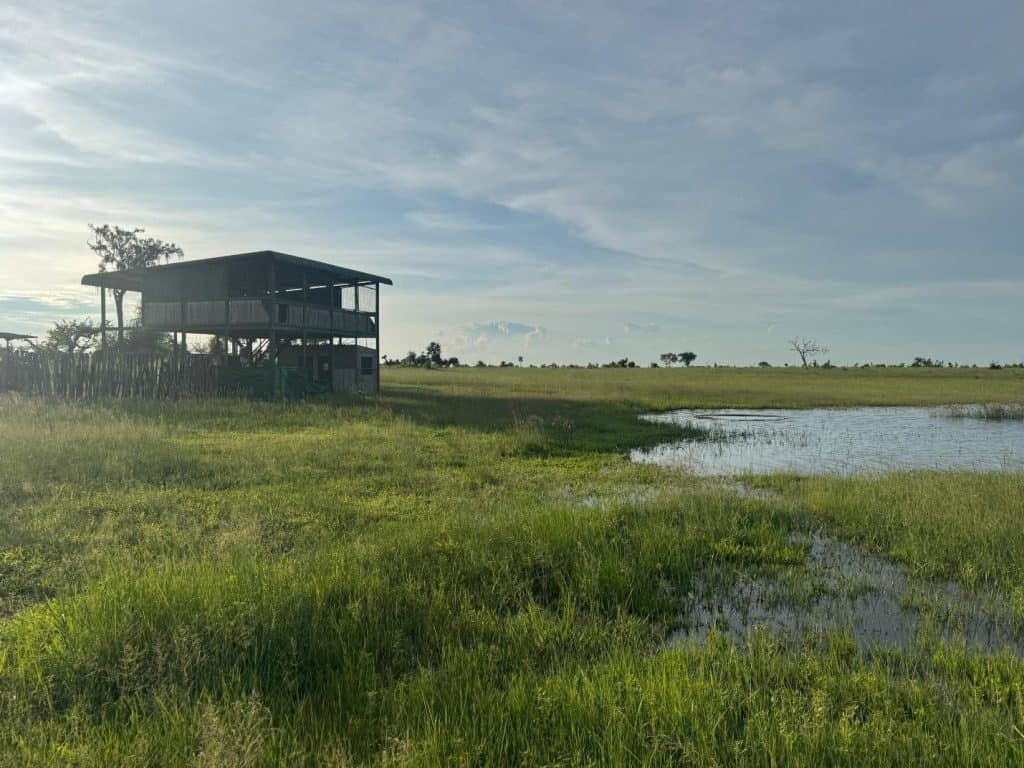
Zambezi National Park is in much the same position as Kazuma. Excellent rainfall has filled the pans and grown the bush. Despite our best efforts over the years to make the roads all weather, with the amount of rainfall, there are some sticky patches and we have had difficulties in fully accessing the area.
The team has started their annual clearing program. Slashing the overgrown grass around the solar panels and borehole infrastructure. Not only does this make it easier to access, but greatly reduces the risk of fires and other faults occurring when choked with vegetation.
Chamabonda 3 platform took a bit of damage at some point over the festive season. Campers trying to avoid the rain brought their braai onto the platform. Unfortunately, the heat and coals burnt a hole in the platform. Very lucky to have not caused a serious fire. This has since been prepared.
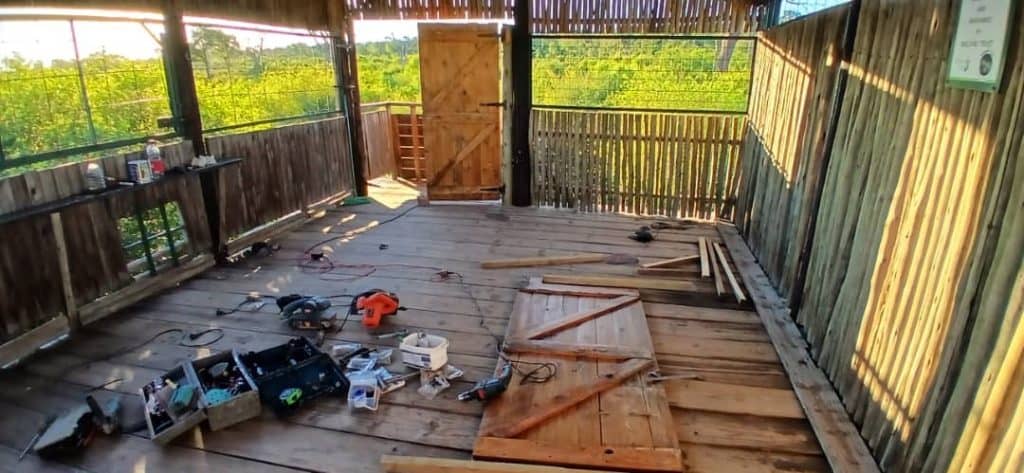
Timots platform has also had a bit of work done to it over the course of the last few months. Some doors needed repairing, and the furniture needed a new coat of varnish. Whilst our work is focused on water, maintaining this key infrastructure is just as important.
All the water infrastructure is performing well and all the pans are full. One would expect the wildlife sightings to have reduced significantly with the abundant resources around. This has been far from the case. Whilst every drive is different, we have been blessed with some excellent experiences.
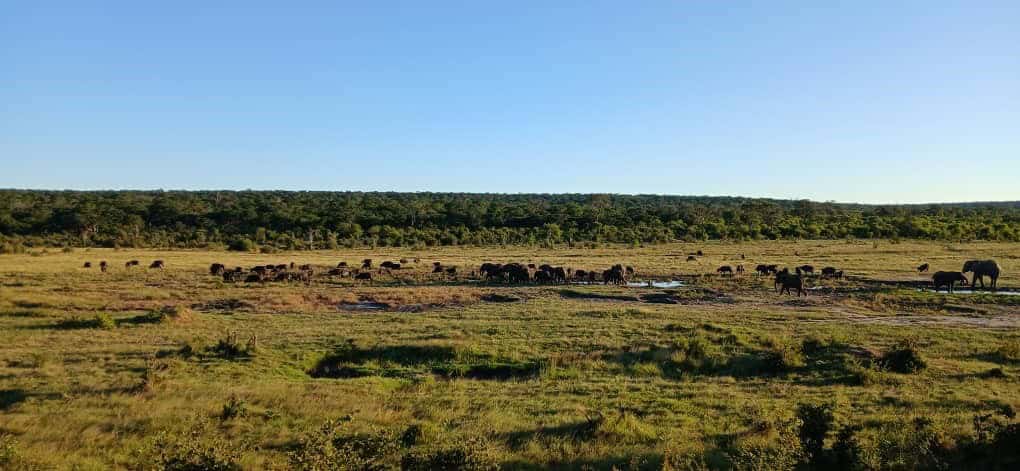
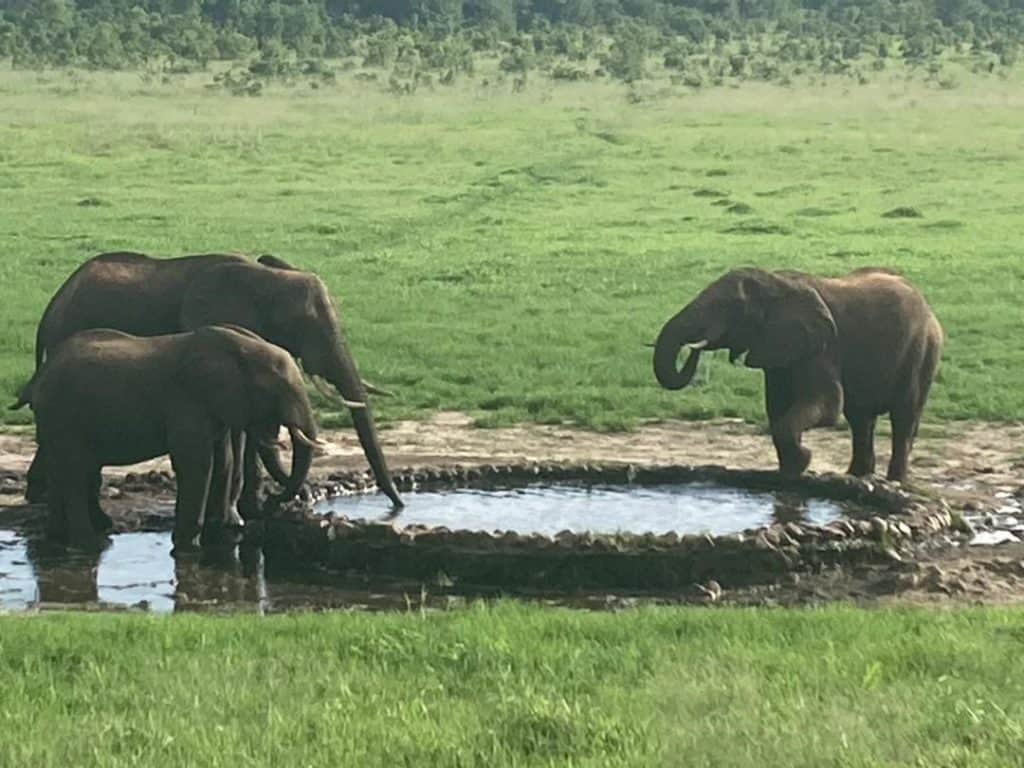
The first was the discovery of nearly 500 elephants, spread across a kilometre or so, but all focused on muddy puddles. Our assumption is that these natural depressions are mineral deposits that are being exposed by the rain. Quite a spectacle to witness.
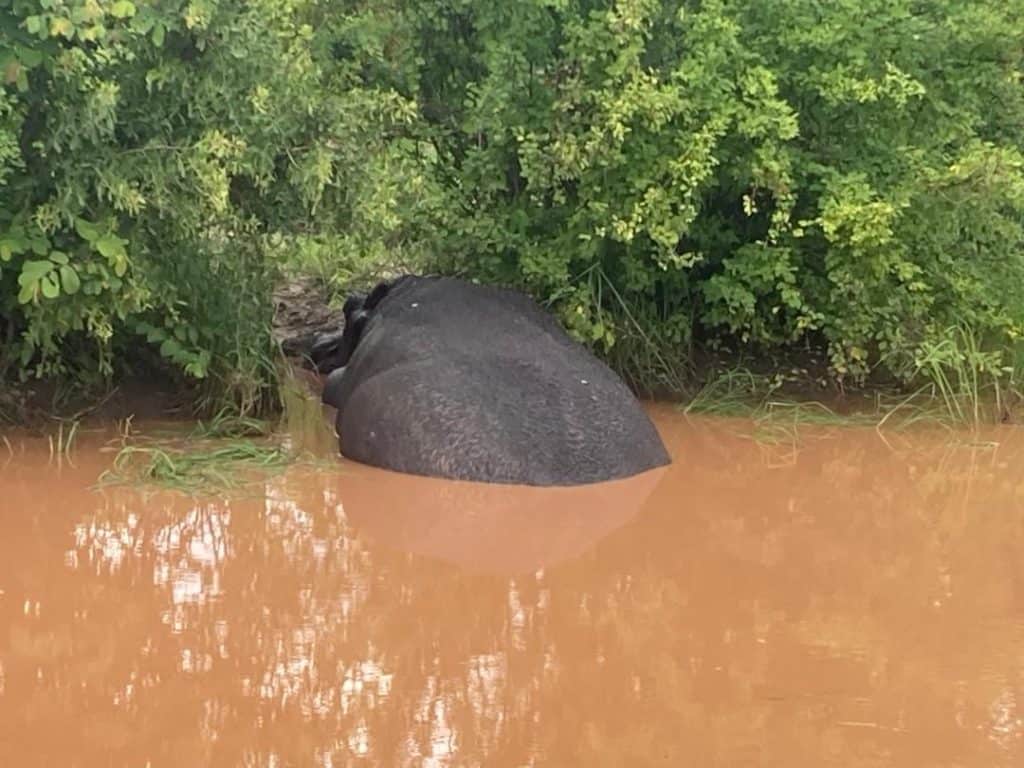
We were stunned to come across a hippo within the Chamabonda, between Timots platform and Borehole 1. Whilst not in a pan, this large mammal had half submerged itself in a large puddle with its head hiding in some bushes. Sadly it has not been seen again on the vlei, and in all likelihood a young male dispersing to new areas.
HWANGE NATIONAL PARK – ROBINS & SINAMATELLA
Just like Kazuma, This has been our most inaccessible area for the last few months. Several of our systems have not been checked since the rains began. We simply cannot get there. Particularly the back areas of Robins where black cotton soil dominates the landscape and becomes very sticky when wet.
However, with the fantastic rainy season, all the pans are full to the brim. As it dries out, April will see the teams venturing further as we begin checking on the systems, ensuring that all is functioning for the up-coming dry months.
The bush is thriving and very thick, however we have been blessed with some incredible sightings. A pangolin tops them off. These shy and secretive animals are seldom seen, so coming across one ambling over the road is special indeed.
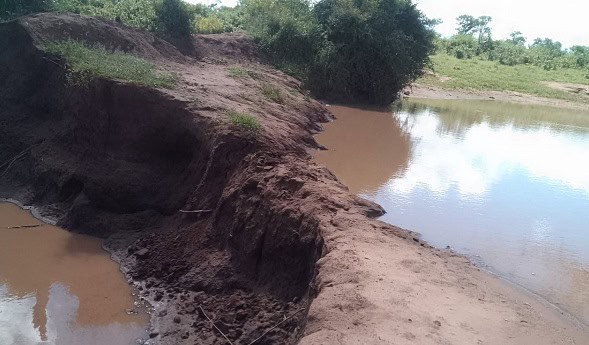
Whilst all the pans are full, the violent storms did take their toll on the landscape. We lost Inyatue Dam wall. With years of elephant traffic over the earth wall, furrows have been cut. For the first time in a long time, the dam filled, and sadly breached over one of these furrows.
It will be a project of ours this year, but unfortunately we cannot rely on this large water source to hold the season.
The Masuma pipeline also took a pounding this season. Crossing a river bed, this pipe gets exposed and damaged when the river flows. With the rains we had this year, this happened quite a bit over the last few months. Whilst the team will continue to conduct the repairs needed, the long term plan is to redirect the pipeline to stop this from happening.
The big news coming out of Hwange over the last few months have been some exciting growth and developments around our water for wildlife work.
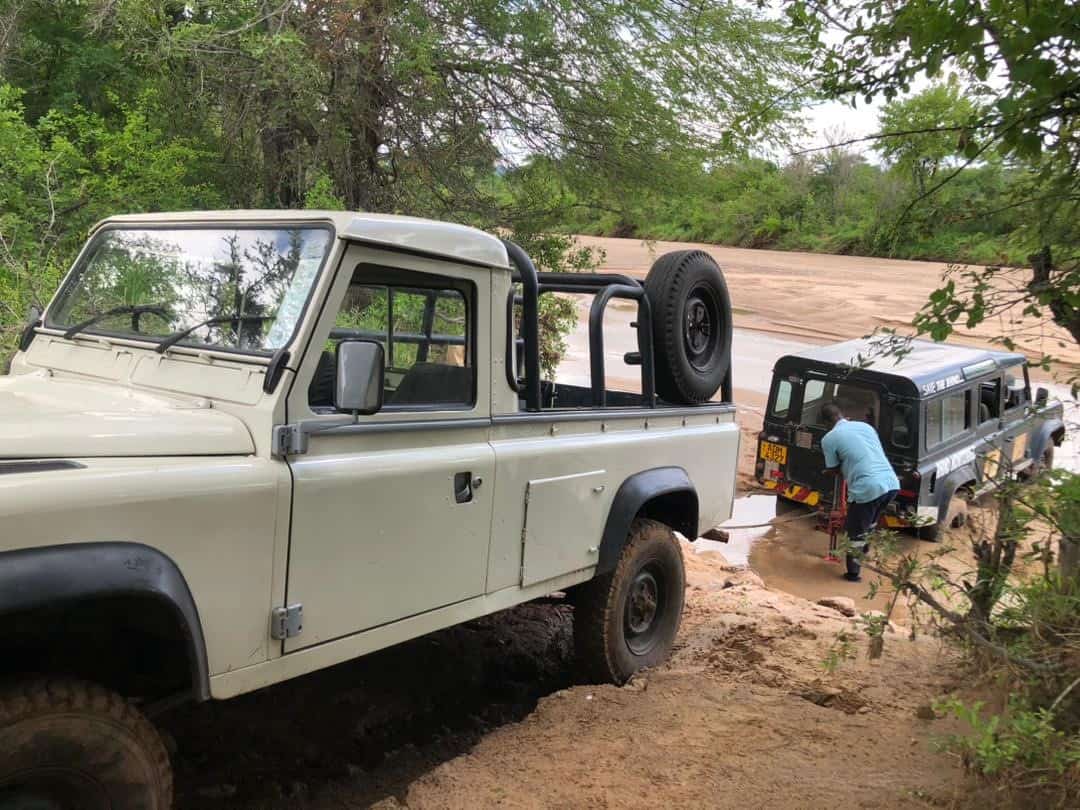
First and foremost, Bhejane was the very proud recipient of an upgraded vehicle. As mentioned previously, our old land rovers are now very tired, and spend more time off the road than on it.
Our teams travel into areas seldom frequented by the everyday traveller. Having a reliable vehicle is imperative, and ensures that we are able to the job required.
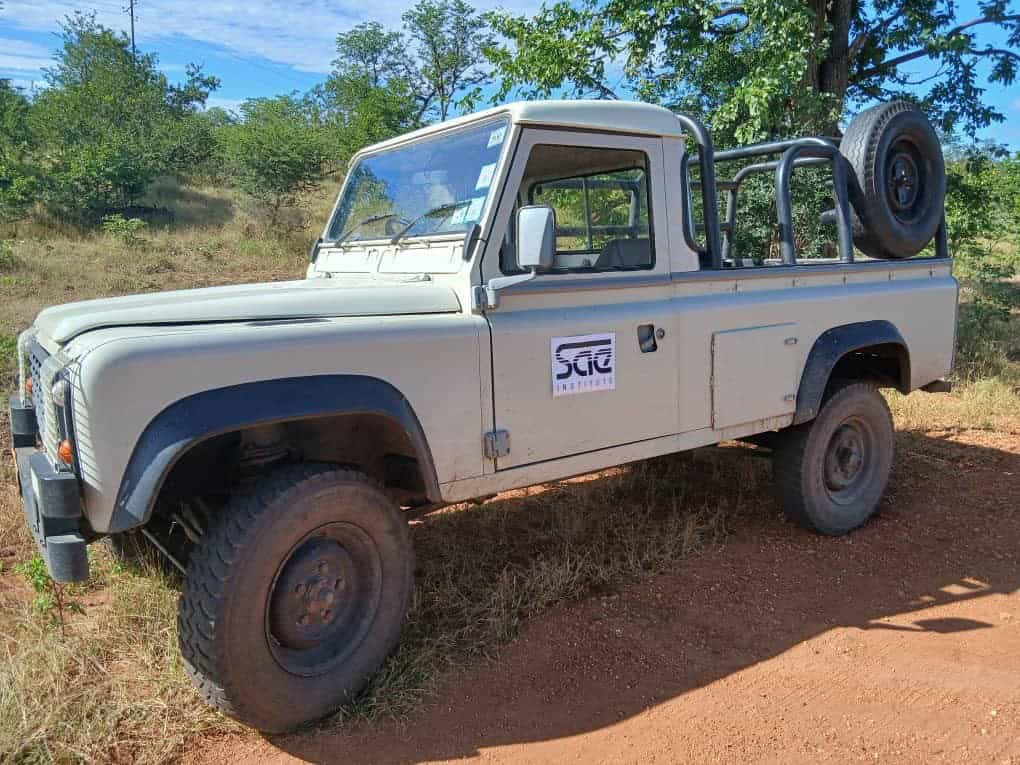
A massive Thank You to SAE Institute of Germany for the incredible donation of this vehicle. It’s been deployed a couple of months now and has already been a massive help in the field. Bringing confidence in their tools to the team, and allowing greater accessibility, even on the wet roads.
The good news doesn’t stop there. Bhejane has been awarded a grant from the Beit Trust. An organisation with deep roots in charitable work across the continent.
The focus of this grant is to increase the yield of water being supplied within the black rhino IPZ in Sinamatella.
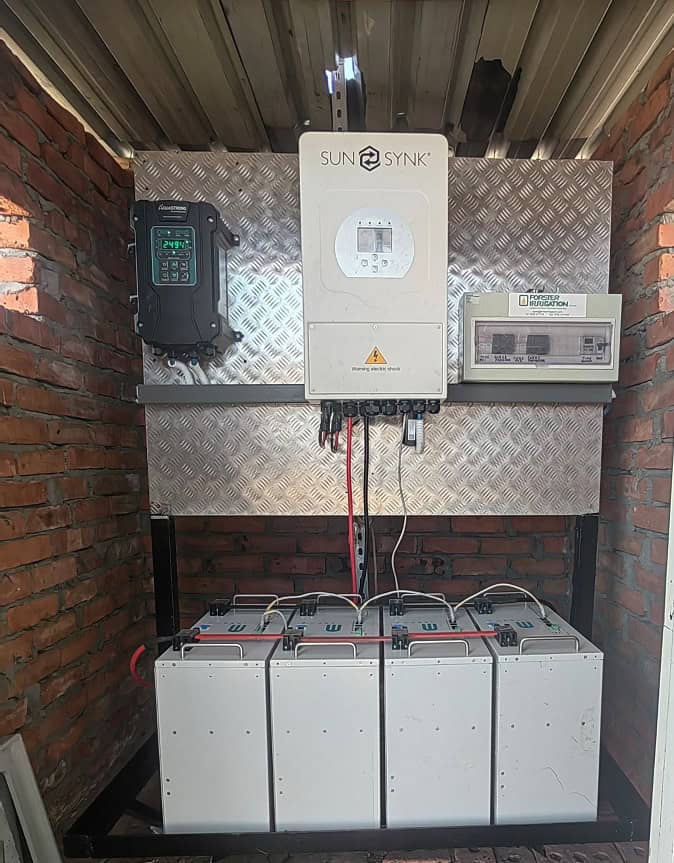
As previously mentioned, we have consolidated our water for wildlife work, with the focus shifting from creating more pans, to improving the water delivery at existing pans. We do this through the installation of batteries to existing systems. Solar alone is great, but powered by the suns intensity, it only gives us about 8 hours of pumping a day. Adding battery power to the system allows pumping to be extended.
The Beit Trust have awarded us a grant to install battery systems on not one, not two, but four boreholes within the Sinamatella landscape. Effectively extending the pumping hours from 8 to 18. Drastically increasing the volume of water supplied, and ensuring the sustainability of these key waterholes.
Whilst the rain has delayed the installation of these systems, the next two months or so will see these amazing additions begin contributing to our water for wildlife work.